Tankless vs tank water heaters: which is better in Lancaster, OH?
Tankless or tank? We break down 2026 prices, lifespan, and efficiency so Lancaster homeowners can pick the right water heater the first time.
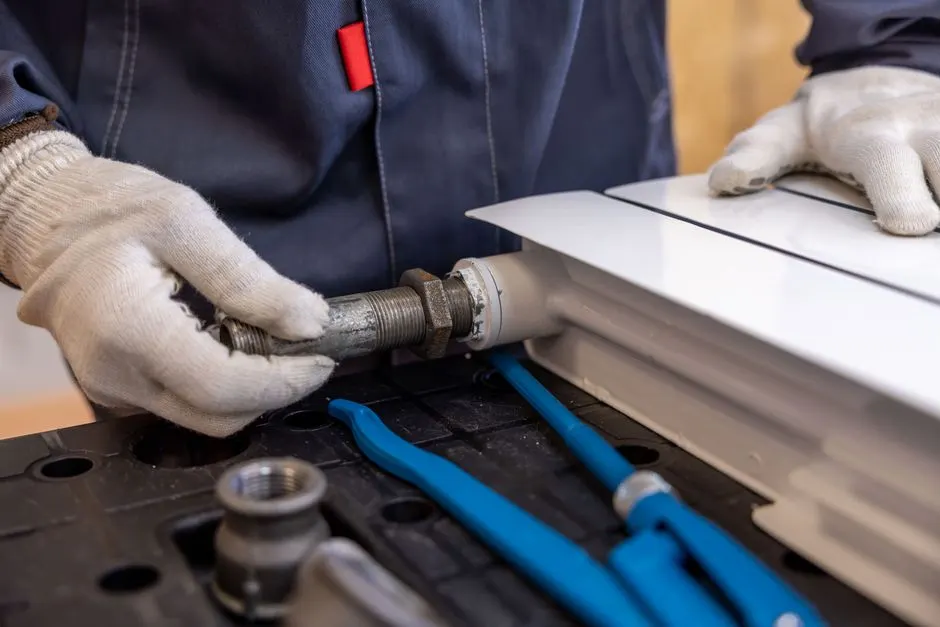
For most Lancaster households, a tank water heater is the better buy if you want the lowest upfront cost and your hot water demand is predictable. A tankless unit wins if you are running out of hot water, plan to stay in the home more than eight years, or want to free up closet space. Tankless vs tank water heaters Lancaster OH is really a math problem: how much hot water you use, what you pay for gas or electricity, and how long you plan to keep the house. We install and repair both types across Fairfield County, and the right answer changes block by block.
How tank and tankless water heaters actually work
A tank water heater is a glass-lined steel cylinder that stores 40 to 80 gallons of hot water at 120°F to 140°F around the clock, reheating as standby losses cool the tank. A tankless water heater is a wall-mounted heat exchanger that fires only when you open a hot tap, heating water at roughly 0.5 to 2.0 gallons per minute per fixture as it passes through. That difference drives everything else - recovery time, footprint, venting, and the size of the gas line feeding it.
In Lancaster, most homes built before 1980 have a 40- or 50-gallon natural gas tank in the basement or a utility closet off the kitchen. Newer builds in subdivisions off Rainbow Drive and Coonpath Road often come plumbed for 50-gallon tanks but can accept a condensing tankless with a PVC vent run through the rim joist. Electric tankless is a harder sell here - Ohio winters drop incoming groundwater into the low 40s, and heating that to 120°F at 4 GPM pulls 120 amps, which usually means a service upgrade.
Tankless vs tank water heaters: which is better in Lancaster OH?
Tankless is better in Lancaster OH when two or more people shower back-to-back, when the current tank is 10 years or older, or when you want the 8 to 12 square feet of floor space back. Tank is better when the budget is tight, the venting is difficult, or the home only has one full bath. Here is how the two stack up on the factors that actually decide it.
- Upfront cost: tank runs $1,200-$2,400 installed; tankless runs $3,200-$5,800 installed in 2026.
- Lifespan: tank averages 8-12 years; tankless averages 18-22 years with annual descaling.
- Efficiency: standard gas tank sits around 0.60 UEF; condensing tankless hits 0.90-0.96 UEF.
- Hot water supply: tank gives 40-50 gallons then recovers in 30-45 minutes; tankless never runs out within its GPM rating.
- Maintenance: tank needs a flush every 12 months; tankless needs descaling every 12-18 months in our water.
If you are weighing this for a rental or a flip, the tank usually pencils out. If you are staying put and your household has grown, tankless pays you back in comfort long before it pays back in gas savings. We walk Lancaster homeowners through both numbers before anyone orders equipment, and we do it as part of our water heater installation and repair Lancaster OH service.
Cost comparison: tankless vs tank water heater in Lancaster Ohio
A like-for-like swap in Lancaster in 2026 looks like this: a 50-gallon gas tank installed with a new expansion tank, pan, and drip leg runs $1,400-$2,200. A 199,000 BTU condensing tankless with a concentric PVC vent, isolation valves, and a recirculation line runs $3,800-$5,500. Add $400-$900 if the gas meter needs upsizing from 1/2-inch to 3/4-inch, which is common in older homes near downtown Lancaster.
Operating cost is where tankless claws some back. A family of four in Fairfield County burning about 40 therms a month for hot water spends roughly $38-$46 a month with a tank and $22-$30 with a condensing tankless at current Columbia Gas rates. That is $150-$200 a year in savings - real, but not enough to justify the swap on its own. The honest pitch for tankless is endless hot water and a longer service life, not a three-year payback.
Electric tankless deserves its own warning. A whole-house electric unit here needs 120 to 150 amps of dedicated capacity, and many Lancaster homes on 100-amp service would need a panel upgrade that adds $1,800-$3,500. Point-of-use electric tankless under a kitchen sink is fine; whole-house electric rarely makes sense in this climate.
Is a tankless water heater worth it in Lancaster OH?
Yes, a tankless water heater is worth it in Lancaster OH for households of three or more people who plan to stay in the home at least eight years and have natural gas at the meter. It is not worth it for a one-bath starter home, a rental you will sell in three years, or any house where the vent run would have to cross a finished ceiling.
Three questions settle it:
- How many hot-water fixtures run at once? Two showers plus a dishwasher means tankless.
- How long will you own the house? Under six years, stay with a tank.
- Do you have gas, and is the vent path short? If yes, tankless is straightforward. If no, the math usually fails.
We see a lot of homeowners in the older blocks around residential plumbing Lancaster OH service calls ask about tankless because their 50-gallon tank cannot keep up with two teenagers. That is exactly the case where tankless earns its keep.
Which water heater lasts longer in Lancaster?
Tankless lasts longer in Lancaster - 18 to 22 years versus 8 to 12 for a tank - but only if you descale it every 12 to 18 months. Lancaster municipal water runs 7 to 9 grains per gallon of hardness, which is hard enough to scale a heat exchanger and cut its life in half if you skip maintenance. A tank in the same water lasts about 10 years before the anode rod is spent and the bottom rusts through.
Two local factors shorten tank life more than most people expect. First, sediment settles in the bottom of the tank and insulates the burner, so the tank works harder and fails sooner. Second, homes with high water pressure above 80 PSI stress the tank fittings and the T&P valve. We check pressure on every water heater call and install a PRV when it is over 80 PSI.
If you want the longest service life and you will keep up with maintenance, tankless wins. If you want the lowest total cost over 10 years and you will replace the tank once, the tank wins by a nose.
Common mistakes we see with water heater swaps
The most expensive mistake is sizing a tankless by the number of bathrooms instead of by flow rate and incoming water temperature. A 199,000 BTU unit rated at 11 GPM at 40°F rise delivers closer to 5.5 GPM in January when groundwater drops to 42°F. Undersize it and you get the same cold-shower problem you were trying to fix.
Other repeat offenders:
- Reusing the old vent. A standard atmospheric tank vents into a metal flue. A condensing tankless needs PVC or CPVC, and a non-condensing tankless needs stainless. Mixing them is a code violation and a carbon monoxide risk.
- Skipping the expansion tank. Lancaster homes on a closed system with a backflow preventer need one. Without it, thermal expansion hammers the T&P valve.
- No drip leg or sediment trap on gas. Debris kills tankless gas valves fast.
- Ignoring the gas line size. A 199,000 BTU tankless needs a dedicated 3/4-inch line. Sharing a 1/2-inch line with a furnace causes flame-out codes.
- No isolation valves. Without them, descaling the unit means shutting off the whole house.
We also see homeowners try to save money by keeping an old tank past 12 years. Once the tank is that old, the failure mode is a flood, not a leak. If your tank is at 10 years and showing rust or popping, plan the replacement before it plans it for you.
When to call a professional
Call a licensed plumber when the tank is leaking from the shell, when you smell gas, when the breaker trips on an electric unit, or when you are switching fuel types or venting categories. Those are not DIY jobs - gas line sizing, venting, and electrical permits all require a licensed contractor in Ohio, and the inspector will check.
We handle the whole job: pull the permit, remove the old unit, run the new gas line or vent, set the expansion tank and pan, and test everything before we leave. If you are still deciding between tank and tankless, we will give you a straight number on both. Our tankless water heater services Lancaster OH team does this every week, and our plumbing repairs Lancaster OH crew handles the tank replacements when tankless is not the right call.
Frequently Asked Questions
Is tankless better than tank water heater in Lancaster OH?
For households of three or more with natural gas, yes - tankless delivers endless hot water and lasts 18-22 years versus 8-12. For one-bath homes or short-term ownership, a tank is the better financial choice. The deciding factors are household size, gas availability, and how long you plan to stay.
How much does a tankless water heater cost in Lancaster Ohio?
Installed, a whole-house condensing tankless runs $3,800-$5,500 in 2026, including venting and isolation valves. Add $400-$900 if the gas line needs upsizing. A tank replacement in the same market runs $1,400-$2,200, so the gap is roughly $2,000-$3,000 upfront.
Which water heater lasts longer in Lancaster?
Tankless lasts longer - 18-22 years with annual descaling versus 8-12 years for a tank. Lancaster water at 7-9 grains per gallon is hard enough that skipping descaling can cut tankless life to 10-12 years. Tank life depends on flushing sediment and checking the anode rod every few years.
Should I switch to tankless in Lancaster OH?
Switch if you run out of hot water, have two or more showers going at once, have natural gas, and plan to stay at least eight years. Stay with a tank if you have one bathroom, no gas, a tight budget, or you are selling within five years. We will price both before you decide.
Does a tankless water heater need maintenance?
Yes - descale the heat exchanger every 12-18 months in Lancaster's water, and clean the inlet filter screen yearly. Budget $150-$250 a year for professional descaling, or do it yourself with a pump kit and white vinegar. Skipping it is the number one reason tankless units fail early here.
Get help with plumbing in Lancaster
Whether you are replacing a 12-year-old tank before it floods the basement or upgrading to tankless for endless showers, we will give you a straight answer and a firm price. Call Lancaster Hocking Flow Plumbing at (740) 766-4111 and we will size the right water heater for your home.